
Horse Racing Slang: A Beginner's Guide to Common Racing Terms
Horse Racing Slang: A Beginner's Guide to Common Racing Terms
Every sport, every competition, and every game has its own particular slang and jargon. Learning the ins and outs of those terms can be confusing — especially when those words and phrases are used in other areas to mean different things.
Understanding horse racing terminology is particularly important to enjoying the sport to its fullest because, unlike knowing how offsides works in football vs in soccer, using the wrong words to make a bet on a race can cost you money.
Before many people attend their first horse race, they might assume that the only bet a person makes is on the horse they think will win. But that's only one type of bet you can make at the track. Horse racing rewards those people who take the time to learn as much as they can to make smart bets that can cover multiple outcomes while still turning a profit and having a good time.
To be clear, you don't have to gamble to enjoy the majesty of a horse race, but getting a little extra money in your pocket is a lot more enjoyable than walking away a few dollars short. Gambling isn't for everyone, but if you want to give it a shot, you may as well come in prepared.
With that in mind, this will serve as a bit of a beginner horse racing guide to terminology and slang so that you can be ready to put your best foot forward when you decide to watch the horses run.
Why Learning the Slang Matters
The thing about horse racing lingo is that it informs every aspect of enjoying your viewing experience. You can have fun watching the races, but the greater your depth of knowledge, the greater your appreciation of everything you see becomes.
When everyone around you is discussing exotic bets, allowance races, the sires and dams of assorted foals, and sloppy track conditions, you can get overwhelmed. If you don't have someone you can ask questions of whenever a new term comes up, your day at the races can become very frustrating.
One way around this is to choose a relaxed environment to watch the races. Instead of trying to figure everything out in the Canterbury Park stands, you could watch the races from the comfort of Boardwalk Kitchen & Bar.
You can try out your knowledge of horse racing terminology with the people you meet in a lower stakes atmosphere where people are more inclined to help you understand what is being said without judgment. Also, the food and drinks are incredible.
So let's break down some of the most important slang from the world of racing so that you can keep up with your friends' conversations and make well-informed bets the next time you hit the track or chill out at Boardwalk.

Types of Races
There are several types of races you may see when you go out to the track. The types of horse races can affect how you bet and how the odds and payouts are calculated. Be on the lookout for these race types.
- Stakes Race: A horse's owner pays a fee to enter a horse into this kind of race which contributes to the overall winner's purse. Some stakes races invite owners to enter horses without paying any sort of fee to run a horse.
- Allowance Race: Horses in this kind of race are given an allowance of weight to carry based on factors such as past performance, age or sex.
- Claiming Race: The horses in these races are eligible to be bought for set prices.
Most races in America are claiming races, which often feature horses that are just breaking into the racing scene. As they get wins, they may graduate to allowance races. This is like moving from the Single A Minor Leagues to Triple A before entering the Major Leagues — Stakes Racing.
Terms for Horses and their Humans
Before we dive into how to bet on horse racing, we still have some vocabulary to cover. The horses and the people that work with them play important parts in setting odds, identifying favorites, and guidelines that can help you make an informed guess instead of a shot-in-the-dark.
When you look at the horses themselves, you see terms that describe what they are and who their parents were. This can give you an insight into what races a horse can qualify for and whether or not it has good genes.
- Filly: A female horse under the age of four
- Foal: A horse of either gender under one year old
- Colt: A male horse under the age of four
- Gelding: A castrated male horse, generally considered easier to handle and more docile than horses with intact anatomies.
- Dam: A horse's mother
- Sire: A horse's father
The humans that train, care for, and ride these horses also have specific terms attached to them. Collectively, they are called a horse's connections.
- Jockey: The person riding the horse on the track
- Trainer: Instills behaviors in a horse while seeing to its physical needs
- Owner: The person who owns a horse and covers the costs of preparing it for racing
Knowing that a horse is a gelding child of a reasonably successful sire that comes from a well-rated trainer with an experienced jockey will influence how the odds are placed on that horse and whether you want to place your money on it.
Track Conditions and Descriptions
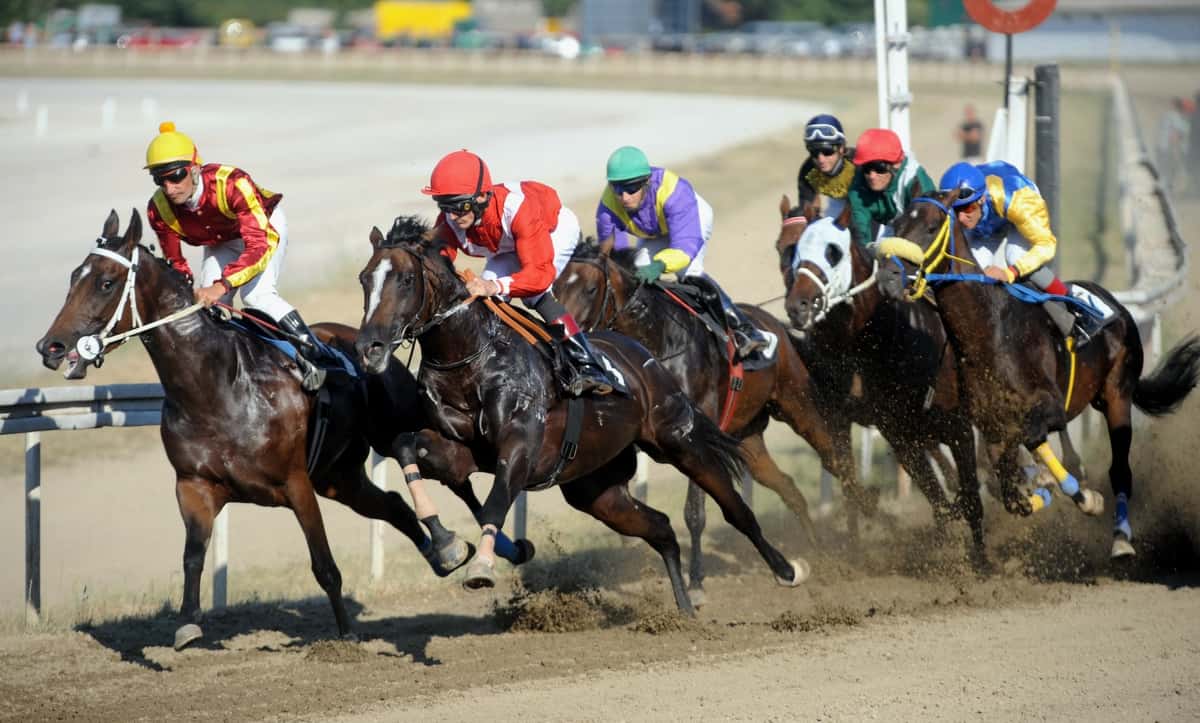
The last stop we'll make in our horse racing terminology cheat sheet is at the track itself. The surface over which the horses run plays a major part in the strategy employed by the jockey and may be better suited to one horse over another.
Horse racing track terms begin with length. The length of the race matters to the horses just as much as it does to Olympians running Track and Field. The most common length you'll encounter for a race will be a furlong — one eighth of a mile.
Something that can also make a big difference in a race is how well a horse takes off from the starting gate and what position the horse holds in that gate. That starting spot is called a horse's post position. Post position can be a huge advantage for an experienced horse and jockey team.
As far as the condition of the track goes, there are words you will hear thrown around. They have specific meanings in a racing context.
- Dirt: A track made of sand, clay, and some other materials
- Fast: A dry and firm dirt track
- Sloppy: A wet and muddy dirt track
- Turf: A track made up of grass and soil instead of only dirt
Fast and sloppy are the two extremes of track conditions. Everything else falls between them. Some horses have better histories with sloppy tracks than with firm tracks, so knowing track conditions can help you make a smarter bet.
Betting Terminology
With all of these terms like claim vs allowance races fresh in your mind, it is time to look at the vocabulary around betting. At first, it can seem complicated, but it begins to make sense pretty quickly.
Basic Bets
The simplest bets you can make are win, place, and show. You can bet on a horse to come in first (win), come in first or second (place), or come in third or better (show). You can make three bets in one by choosing to bet Across the Board — allowing you to get a payout in more than one way on the same bet.
Exotic Bets
Exotic wagers are where things get hard for new bettors to follow along. These are bets that require multiple combinations to achieve an optimal payout. Some examples are:
- Trifecta: betting on a specific order for the first three finishers
- Exacta: betting on the specific order of the top two finishers
- Daily Double: betting on the winners of consecutive races
- Boxed: taking the horses chosen for a bet but expanding the combinations they can finish in. For example, a Box Trifecta would pay out if horses 2, 4, and 6 finish in the top three of a race in any order
- Key: using one horse as the key, putting that horse into more than one exotic bet combination
Understanding the Odds
Odds are based on which horse more people are betting on to win. Every day, a track's oddsmaker will take stock of how they think people will bet throughout the day to set the morning odds that you will see in a racing form.
As the day goes on, the way people are actually betting can affect the morning odds. Because if more people bet on a horse that had the second best odds to win, that horse becomes the odds on favorite. Horse racing odds are not purely objective. They change and fluctuate based on which horse the most people bet on to win. And the odds will change all the way up to the very last second.
The better a horse's odds, the lower the payout. If you put two dollars down on one horse with 2/1 odds and one horse with 10/1 odds, your bets could potentially pay out $4 and $22 respectively.
When you factor in the different odds for different exotic and standard bets and the way the odds shift and change through the day, you can see how placing bets becomes a game of skill and logic within the sport of horse racing. You aren't just betting on the horses, you are betting based on how every other bettor is playing the game.
Tips to get Started
So how do you get started? What are the best horse racing tips for beginners? The most important thing is to be willing to learn. There is a lot more horse racing terminology that we haven't looked at here. Get comfortable with asking questions if something is confusing.
Next, start small. Don't jump into complex betting strategies or try to show off with a Trifecta. Stick to win bets and show bets to begin. And make your own choices. Everyone gets the same information about these horses, so follow your own instincts based on what you've been able to learn about the day's horses.
Don't feel the need to bet on every race. Take a few off here and there to focus on fun and take any pressure off of your shoulders. And if you feel like putting a couple of bucks down on a bet because a horse has a name that resonates with you, do it! This is supposed to be fun. Have fun!
Use Your Horse Racing Terminology at Boardwalk Kitchen & Bar
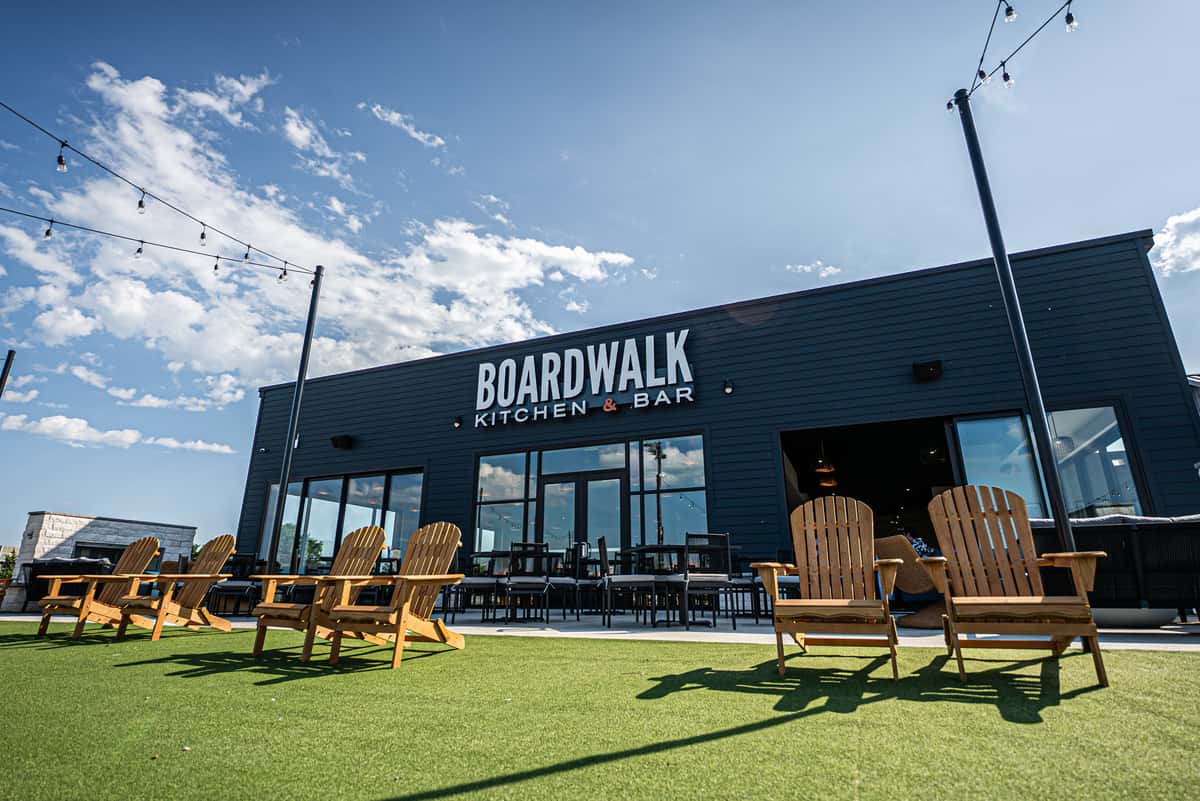
You may have started reading this wondering, "what is a furlong?", but you have a lot more racing knowledge now. Boardwalk Kitchen & Bar is located a few feet away from Canterbury Park and has big screens or a patio that you can use to watch the races.
You can reserve private space for you and your friends or hang out with the regulars. The staff will make sure you have all the crab cakes and cocktails you want while you flex with your horse racing terminology.
Boardwalk is a perfect space for you to learn more about the sport of racing. The food is excellent. The drinks are unbeatable. And the people there are ready to welcome new eyes to the thing they love — a day at the races.